
Advantages
- Markedly enhanced brain penetration: Following intravenous administration of a tolvaptan silicon analogue in mice, brain concentrations reached approximately two-fold higher levels compared with the corresponding carbon analogue, demonstrating a pronounced improvement in blood–brain barrier (BBB) permeability.
- Practical access to medium-sized benzazasilacycles: A robust and efficient synthetic route to 7- and 8-membered benzazasilacycle structures has been established, providing access to ring systems that have been notoriously challenging to construct by conventional methods.
Technology Overview and Background
The vasopressin V1a receptor is a well-known peripheral target for diuretics, but it is also widely expressed in the brain and has been implicated in various central nervous system (CNS) disorders, including schizophrenia, autism spectrum disorder, depression, and anxiety-related disorders. Recent clinical data have suggested potential benefits of V1a receptor antagonists in autism spectrum disorder, further increasing interest in V1a antagonists that effectively act in the CNS. However, many existing vasopressin receptor antagonists show poor BBB penetration, which limits their utility as CNS-targeted therapeutics. To address this limitation, the inventors focused on the medium-sized ring structure of tolvaptan, a prototypical V1a/V2 receptor antagonist, and designed a new strategy to optimize physicochemical properties for CNS exposure by replacing a part of the ring with silicon (Si), applying the so-called carbon–silicon “silicon switch” concept. In addition, there have been very few reports on medium-sized silicon-containing ring systems that include nitrogen as a heteroatom, and there is a clear need for new benzazasilacycle construction methods that are broadly applicable to small-molecule CNS drug discovery beyond V1a receptor antagonists.
In this work, the inventors developed a new catalytic ring-closing metathesis approach that enables efficient construction of 7- and 8-membered benzazasilacycle cores and successfully generated a series of tolvaptan silicon analogs in which a methylene unit in the medium-sized ring is replaced by a dimethylsilyl (SiMe₂) group. The resulting compounds exhibit increased lipophilicity (logD) and achieve brain concentrations in mice that are approximately twice those of the corresponding carbon analogs. Importantly, the V1a receptor inhibitory activity is retained after silicon incorporation, indicating that brain penetration can be enhanced without compromising pharmacological potency. This silicon-switch–based modulation of physicochemical properties represents a promising lead optimization strategy for CNS-targeted small molecules and is expected to be extensible to other molecular targets.
The tolvaptan silicon analogs generated through this technology are therefore attractive low-molecular-weight lead candidates that successfully combine high V1a receptor antagonistic activity with improved brain exposure, and may serve as starting points for novel therapeutics for CNS disorders such as schizophrenia, autism spectrum disorder, and depression
Data
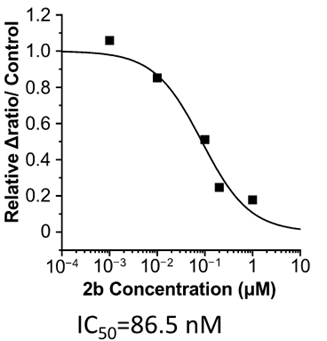
- The tolvaptan silicon analogue showed an IC₅₀ of 86.5 nM for vasopressin V1a receptor antagonistic activity, indicating that high potency is maintained after silicon incorporation.
- Following a single intravenous dose in mice (10 mg/kg), an increase in lipophilicity (logD) was observed and the brain-to-plasma concentration ratio at 40 minutes post-dose was approximately two-fold higher than that of the corresponding carbon analogue, indicating markedly improved BBB permeability and CNS exposure.
Patent(s)
Patent: Patent application pending (not yet disclosed)
Principal Investigator
Mitsuhiro ARISAWA, Professor(Graduate School of Pharmaceutical Sciences, The University of Osaka)
Expectations
The University of Osaka is seeking pharmaceutical companies interested in collaboration and/or in-licensing opportunities for the development of therapeutics based on this silicon-switch–driven tolvaptan analogues and related compounds.
Potential collaboration schemes include:
・ Lead optimization and preclinical development starting from these tolvaptan silicon analogues and related structures
・ Application of the carbon–silicon “silicon switch” strategy to other targets and chemotypes (e.g., joint research on design, synthesis, and profiling of silicon-containing analogues)
We would be pleased to arrange an initial online meeting or technical briefing to share data and to discuss how this technology could fit with your R&D strategy. Please feel free to contact us to explore potential collaboration opportunities.