Advantages
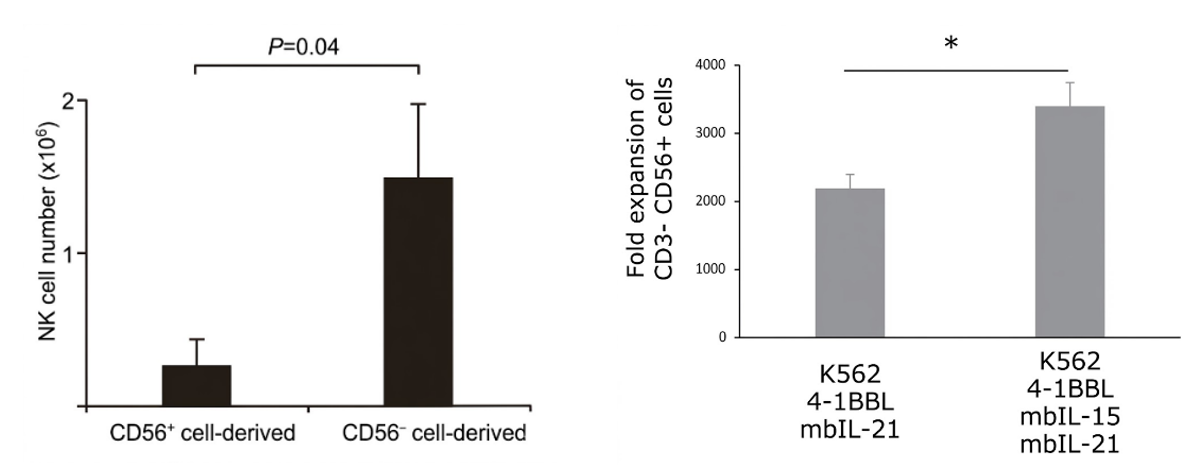
- Achieves higher NK cell yield in a short culture period by utilizing newly identified progenitor cells as the starting population
- Enhances cell expandability in CAR NK cell manufacturing and supports optimization of the overall production process
- Further improves induction efficiency using a novel feeder cell line
Key Data
- Achieves higher NK cell yield in a short culture period by utilizing newly identified progenitor cells as the starting population.
- Enhances cell expandability in CAR NK cell manufacturing and supports optimization of the overall production process.
- Further improves induction efficiency using a novel feeder cell line.
Partnaring Model
The University of Osaka is seeking pharmaceutical companies, biotech companies, and CDMOs interested in the development of CAR‑NK cell therapeutics, NK cell‑based cell therapies, and/or NK/CAR‑NK manufacturing processes based on this technology.
If you have any interest, we can arrange technical discussions with the principal investigator and are open to flexible partnering schemes, including evaluation studies, collaborative research, and licensing.
Background and Technology
Autologous CAR‑T cell therapy demonstrates remarkable clinical efficacy, but its high manufacturing cost and long production lead time remain major challenges. In contrast, NK cells are less likely to cause GVHD and are expected to serve as an “off‑the‑shelf” platform for allogeneic cell immunotherapy. However, current CAR‑NK manufacturing still faces key bottlenecks: the optimal cell of origin has not been clearly defined, and conventional protocols based on differentiation from CD34‑positive cells require 3–5 weeks of co‑culture yet yield limited numbers of NK/CAR‑NK cells.
This technology establishes a highly efficient manufacturing process for mature NK and CAR‑NK cells by identifying the NK progenitor as the true cell of origin and employing a novel feeder cell line optimized for its characteristics, thereby enabling production in a shorter culture period compared with conventional methods.
Principal Investigator
Professor. Naoki HOSEN (Department of Hematology and Oncology, The University of Osaka Graduate School of Medicine)
Patents
PCT/JP2025/014765