
Potential Advantages
- Circumventing tumor immune escape caused by antigen loss
- Expanding therapeutic applications beyond multiple myeloma to other hematologic malignancies and solid tumors
- Reducing the risk of damage to normal cells
Current Stage and Key Data
Current Stage
- Preclinical development; optimization of CAR constructs incorporating R8H283 is completed.
Key Data
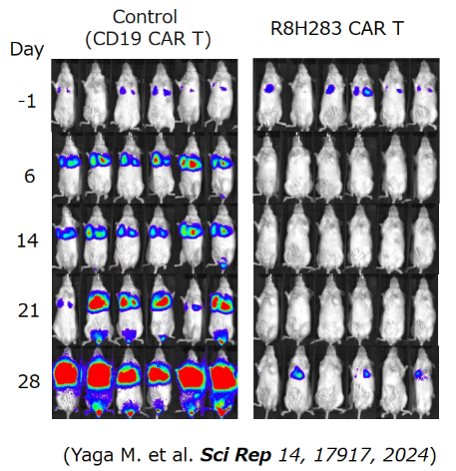
- R8H283 CAR-T cells demonstrated more durable tumor regression than conventional CD19 CAR-T cells in an in vivo model (see figure).
- R8H283 CAR-T cells also demonstrated antitumor activity in an in vivo model of non-small cell lung cancer (NSCLC).
Partnering Model
The University of Osaka is seeking pharmaceutical and biotechnology partners interested in collaborative research or licensing, with a primary focus on the development of R8H283-based CAR-T cell therapy.
Collaboration opportunities also include applications in CAR-NK cells and bispecific antibodies, as well as expansion to a broad range of CD98-positive malignancies, including acute myeloid leukemia (AML), non-small cell lung cancer (NSCLC), and T-cell lymphoma.
Flexible partnering arrangements are available to accommodate partners’ interests, including technical discussions with the principal investigator, technology evaluation, collaborative research, and licensing.
Background and Technology
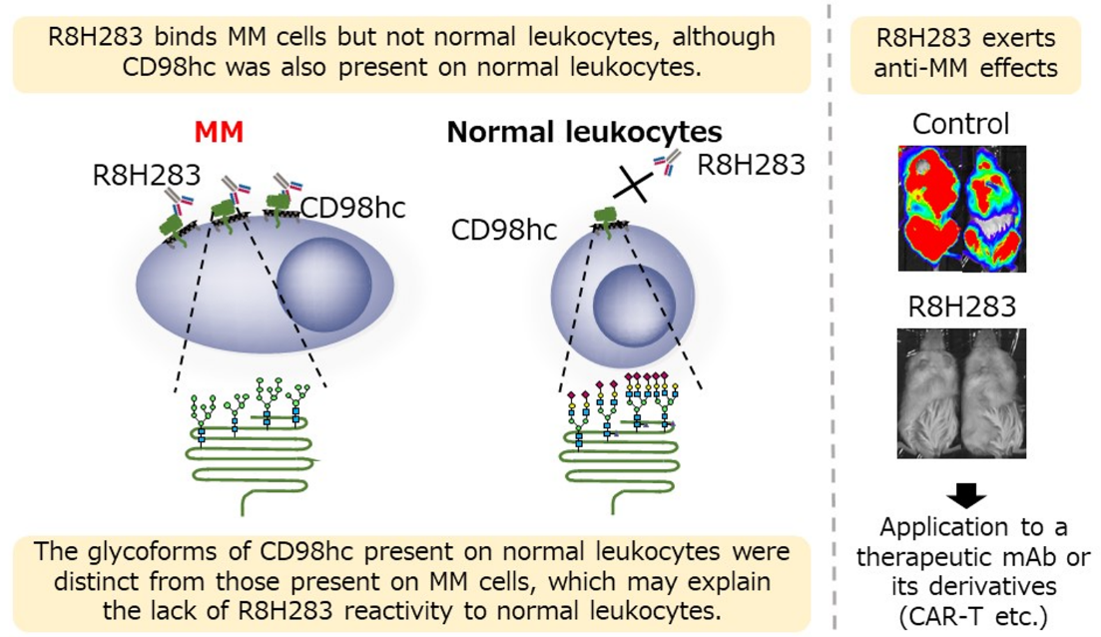
Multiple myeloma remains a disease in which treatment resistance and relapse pose major challenges. CAR-T cell therapy may also face challenges such as relapse due to target antigen loss or downregulation and damage to normal cells expressing the target antigen (on-target/off-tumor toxicity). These challenges underscore the need for targeting technologies that distinguish tumor cells from normal cells.
This technology targets CD98hc, the heavy chain of the CD98 complex involved in amino acid transport. R8H283, an antibody developed by our research team, recognizes a tumor-selective epitope associated with differences in CD98hc glycosylation. By applying this recognition property to CAR-T cells and other therapeutic modalities, we aim to develop treatments that deliver potent and durable antitumor activity while minimizing damage to normal cells.
Principal Investigator & Academic Institution
Professor. Naoki HOSEN (Department of Hematology and Oncology, The University of Osaka Graduate School of Medicine)
Patents and Publications
Information on related literature is included in the materials. Please click the “Iinterested in this technology? [Download Materials]” button below to download and view the materials.